Metal detecting, by the numbers
Know the machine before you swing it
Most detecting advice online answers a question you did not ask. What you actually want to know is what your machine reads on a silver dime in your soil, which coil to put on for the site in front of you, and whether the machine you are about to spend nine hundred dollars on is better than the one that costs six hundred and fifty. That is what this site is: machine-specific target ID charts, depth and frequency tables, settings by site type, honest head-to-head comparisons and complete kits with running totals.
If you are buying one machine and keeping it
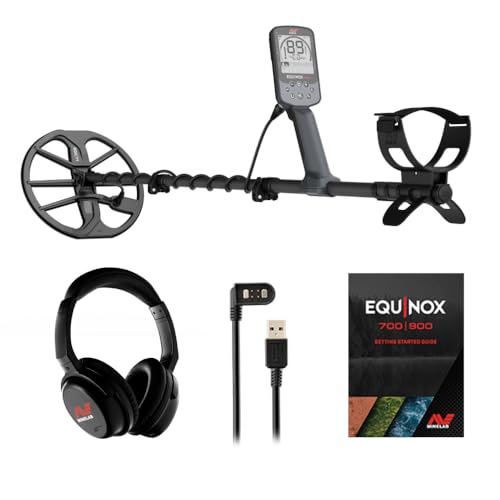
Minelab Equinox 900
Simultaneous multi-frequency plus six single frequencies, submersible to 16 feet, and it ships with both the 11 inch and 6 inch waterproof Double-D coils, which means it covers park, field, beach and gold without you buying a second machine. It is the default recommendation for a reason, and the cheaper Equinox 700 is the same platform if you do not need the extra modes.
Price was accurate when this page was compiled and changes often.
Start with the number you came for
- Target ID chart What each number on the 0 to 99 scale actually means, from iron through foil and pull tabs up to copper and silver.
- Depth by target and soil Realistic depth ranges for a coin, a ring, a relic and small gold, crossed with how mineralised your ground is.
- Frequency by target Why low kHz favours silver and high kHz finds small gold, with the published frequency of every current machine.
- Coil size against depth What a bigger coil buys you, what it costs you in trash, and why the small coil is the upgrade most people skip.
Three complete kits, with the totals done for you
A detector on its own is not a setup. You need a pinpointer, something that cuts a clean plug, somewhere to put the trash, and headphones, because the faint signals are the good ones and a speaker loses them to wind. These three kits are genuinely different builds rather than one list at three prices, and every line is priced and linked.
What is on the site
- Charts 84 pages Machine-specific target ID charts, depth by target and soil, frequency by metal, coil size against depth and separation, ground balance and discrimination settings by site type, tone profiles, waterproof ratings, battery life and weight. Dense, citable tables rather than general explanation.
- Best Picks 58 pages Roundups with a Beginner, Intermediate and Expert pick in every category, from first detectors and gold machines to pinpointers, coils, diggers, scoops and headphones.
- Compare 48 pages Machine against machine with the verdict in the first two sentences: Equinox 900 against the Legend, Manticore against the 900, AT Pro against the multi-frequency machines, plus pinpointer and coil comparisons.
- Reviews 46 pages Research-based reviews built from manufacturer specification sheets, owner manuals, warranty terms and the consensus of verified owner reviews. No hands-on testing claims and no find claims.
- Guides 24 pages How to get permission, what the law actually says about where you may detect, how to read a signal, how to dig and fill a plug properly, and how to set a machine up for the ground in front of you.
- Gift Guides 12 pages What to buy someone who detects, at every budget, including the accessories they will not buy for themselves.
- Calculators 9 tools Coil coverage and sweep time, expected depth, dig time budget, battery runtime, and what a gold nugget or a handful of silver coins is actually worth.
- Complete kits Beginner, intermediate and expert builds with every item priced, linked and totalled.
How we research, and what we will not do
We do not test machines in person and we say so on every page. Everything here is compiled from manufacturer specification sheets, owner manuals, published listing data, warranty terms and the recurring themes in verified owner reviews. Where a figure cannot be sourced, it does not get printed.
We also publish no find claims. Plenty of detecting content is built on photographs of a good day and an implied promise, and that promise is the least reliable thing on the internet. What we can tell you honestly is what a machine's manual specifies, what its published target ID scale is, what a coil change does to separation, and what the whole setup costs. Target ID numbers, depth figures and settings shift with soil chemistry, moisture, target orientation and firmware, so every table here is a starting point to check against your own ground rather than a promise about it.
On the law: get the landowner's permission before you detect on ground you do not own, stay off national parks, scheduled monuments and protected archaeological sites, report finds under whatever treasure or portable antiquities scheme applies where you live, and fill every hole you open. Detecting survives as a hobby because most detectorists do those four things.
Researched, not professional advice. DetectorCalc is an independent site. As an Amazon Associate we earn from qualifying purchases, at no extra cost to you. Read the full affiliate disclosure.